Read enough glamping reviews and a pattern emerges. Guests rarely lead with the view, or the fire pit, or the walk to the village. They lead with the moment the tent stopped feeling like a tent.
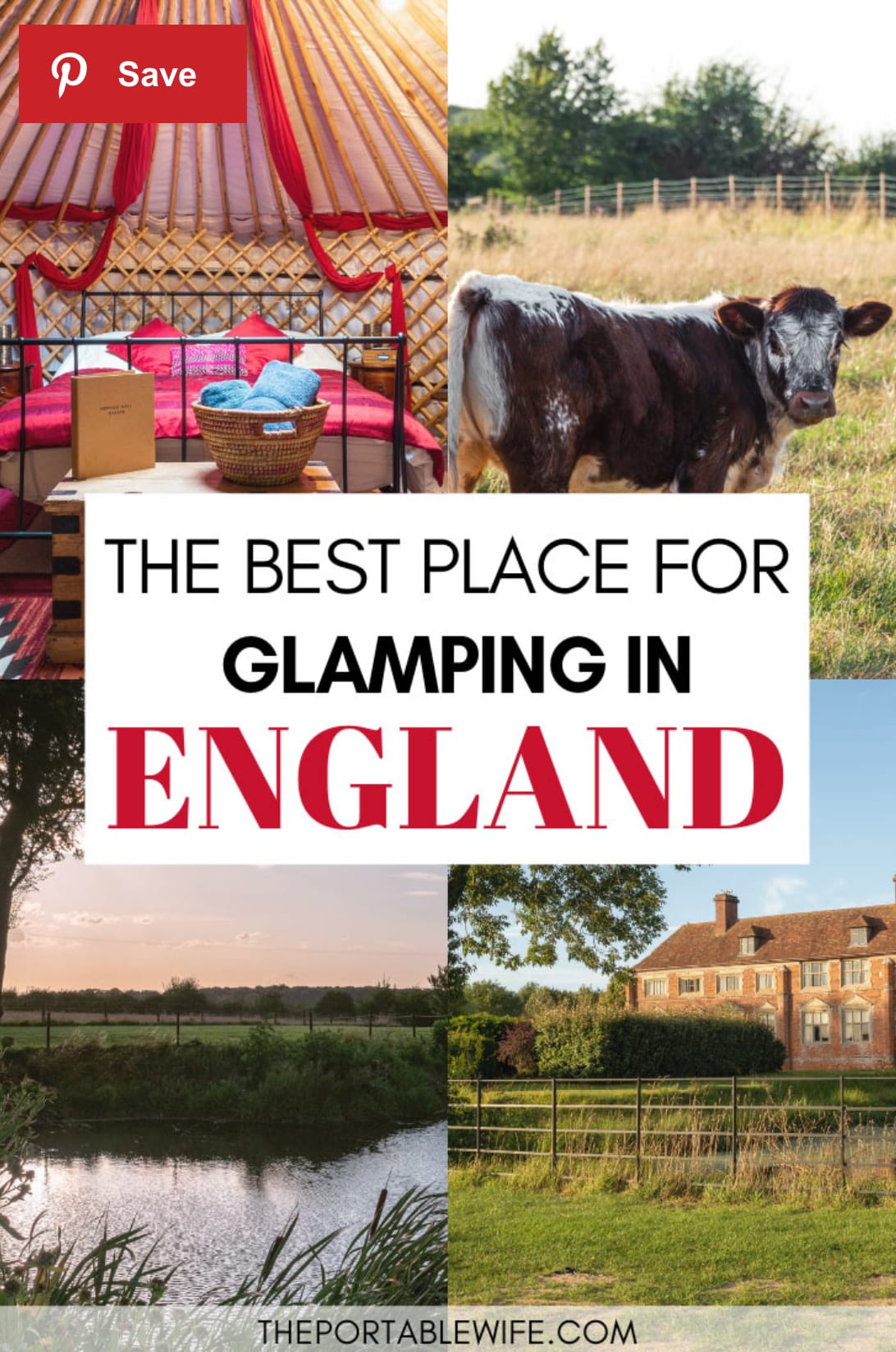
Usually it is something small and domestic. A hot shower with real water pressure. A warm towel. A plug socket beside the bed. Waking on a proper mattress rather than an inflatable one. One British travel writer, reviewing a Suffolk glamping estate – Kenton Hall Estate, found herself writing about heated bath towels and a lockable wooden door — not the manor house she could see through the trees.
That tells you something useful if you are building a glamping business. The luxury in luxury glamping is not grandeur. It is the removal of compromise.
Your competition is not the campsite. It is the boutique hotel.
Someone paying a premium nightly rate for a yurt has already done the maths against a country hotel and chosen you, because they want the setting and the comfort. If any part of the stay tips back into camping — a cold night, a trek across a field in the dark, nowhere to charge a phone — the comparison snaps back, and the review reflects it.
This does not mean sanding away every trace of the outdoors. The whole point is that you can hear rain on the canvas and see the sky through the crown. It means the outdoors should be something guests choose to step into, not something they endure.
The bed is the review
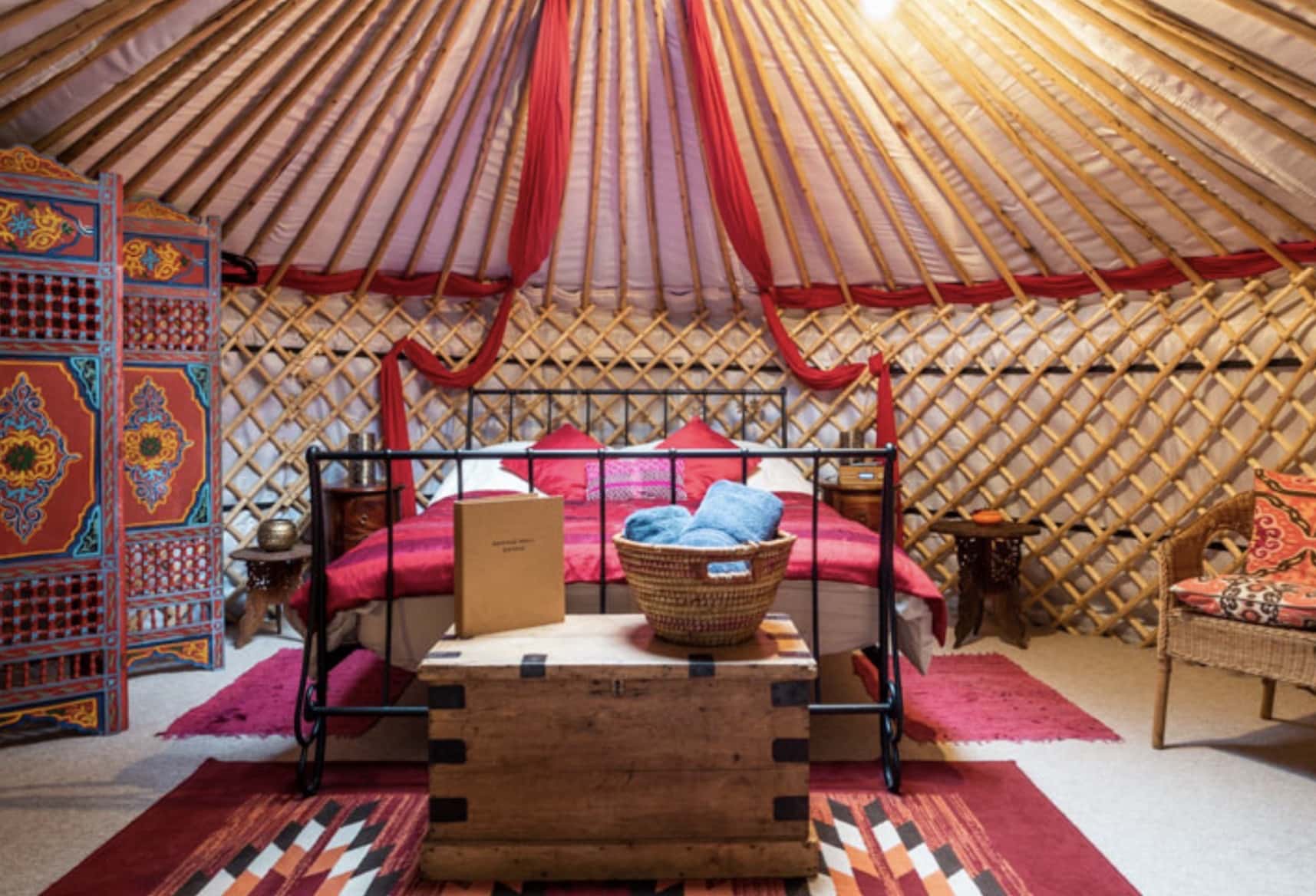
If you read nothing else here: buy the best bed you can afford.
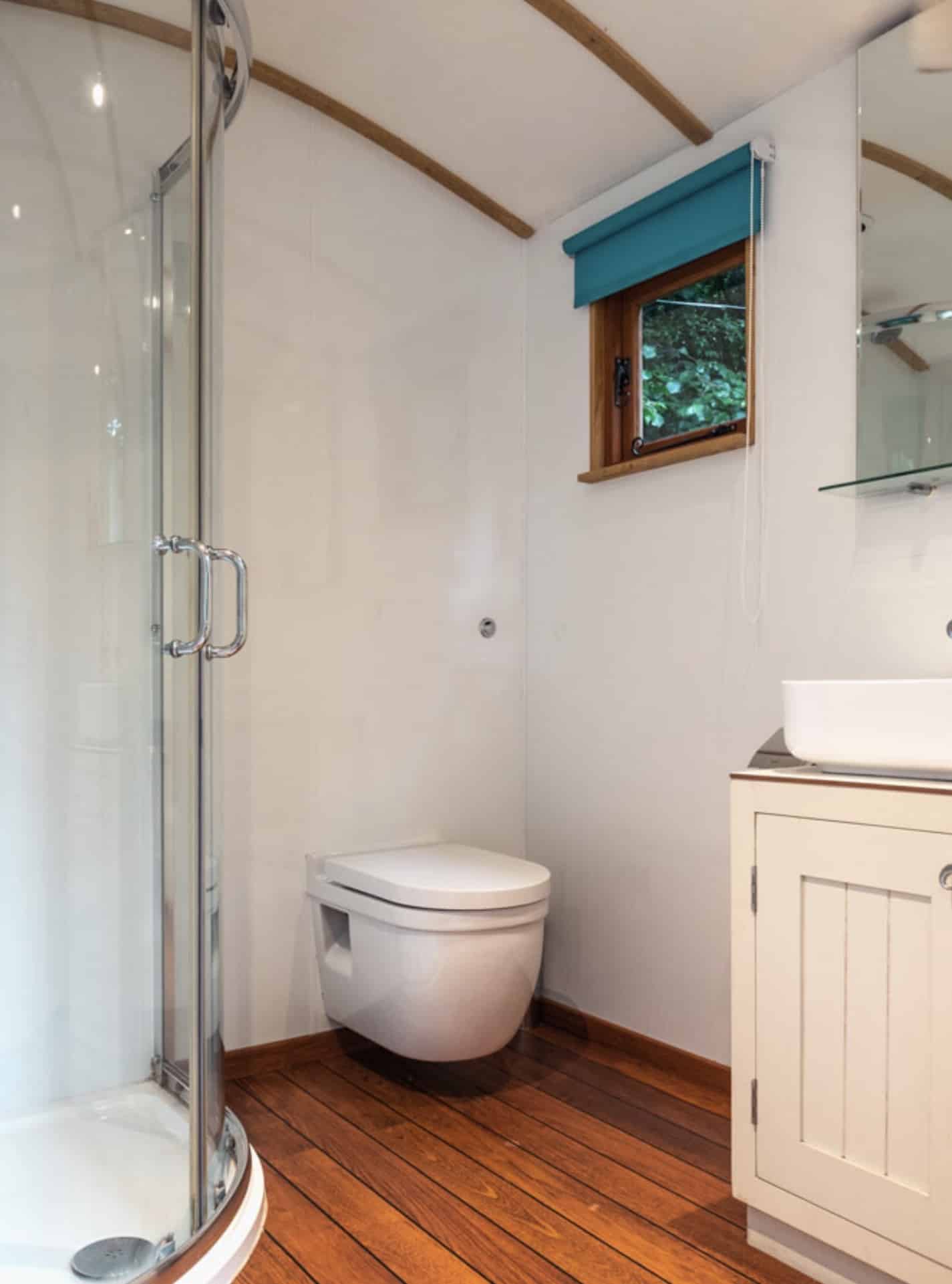
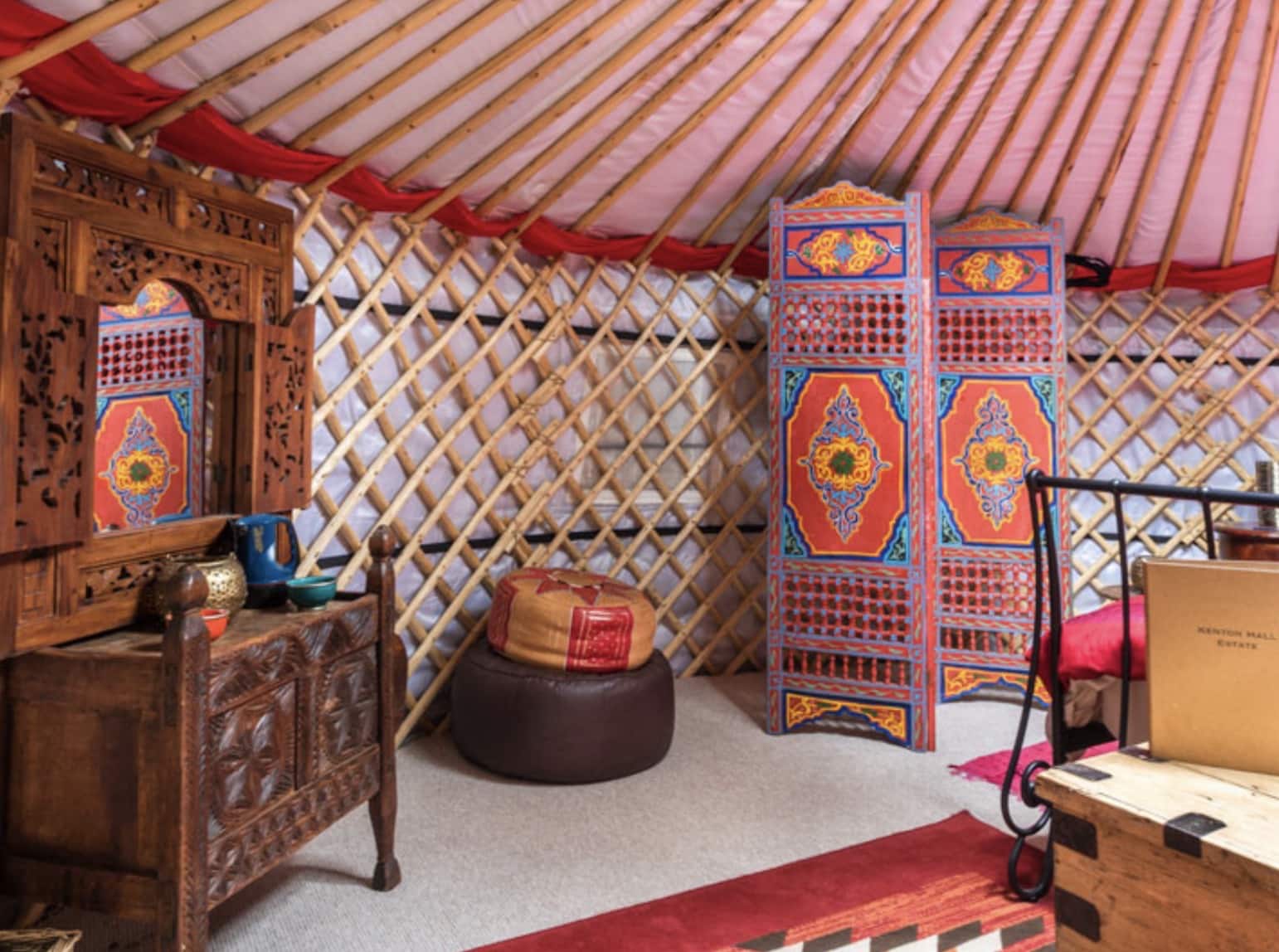
A generous, well-dressed bed does more for your rating than almost any other purchase, and it photographs better than anything else on your site. It is the image that stops the scroll on a booking page. Yurts are unusually good at showcasing one, because the circular walls and central height draw the eye inward and upward. A bed placed beneath the roof crown, lit from above, is genuinely striking in a way a rectangular room cannot manage.
Our yurts come with two roof cap options for exactly this reason — a transparent PVC cap for natural light through the day, and a traditional felt-lined cap for sleeping. Guests get the sky when they want it and darkness when they need it. You can see the full specification on our materials page.
Warmth is what extends your season
This is the commercial one. A yurt that is comfortable in October, and again in March, earns across a far longer season than one that only works from May to September. On a small site, that difference is not marginal — it is the difference between a seasonal side income and a business.
Traditional Mongolian yurts were built for a brutal continental climate, and the construction reflects it: layered sheep-wool felt insulation, a low profile that sheds wind, and a wood-burning stove venting through the crown. That is not a bolt-on for the UK market. It is what the design was always for. It is also why Great Staughton Primary uses their yurt right through winter while other outdoor spaces sit empty.
If you are weighing up a purchase, ask the direct question: what is the realistic occupancy window, with a stove, in British weather? The answer changes your annual revenue far more than the purchase price does. We have set out the numbers in our yurt investment and ROI guide, and in more detail in this breakdown of how a well-built yurt pays for itself.
The bathroom question decides your price bracket
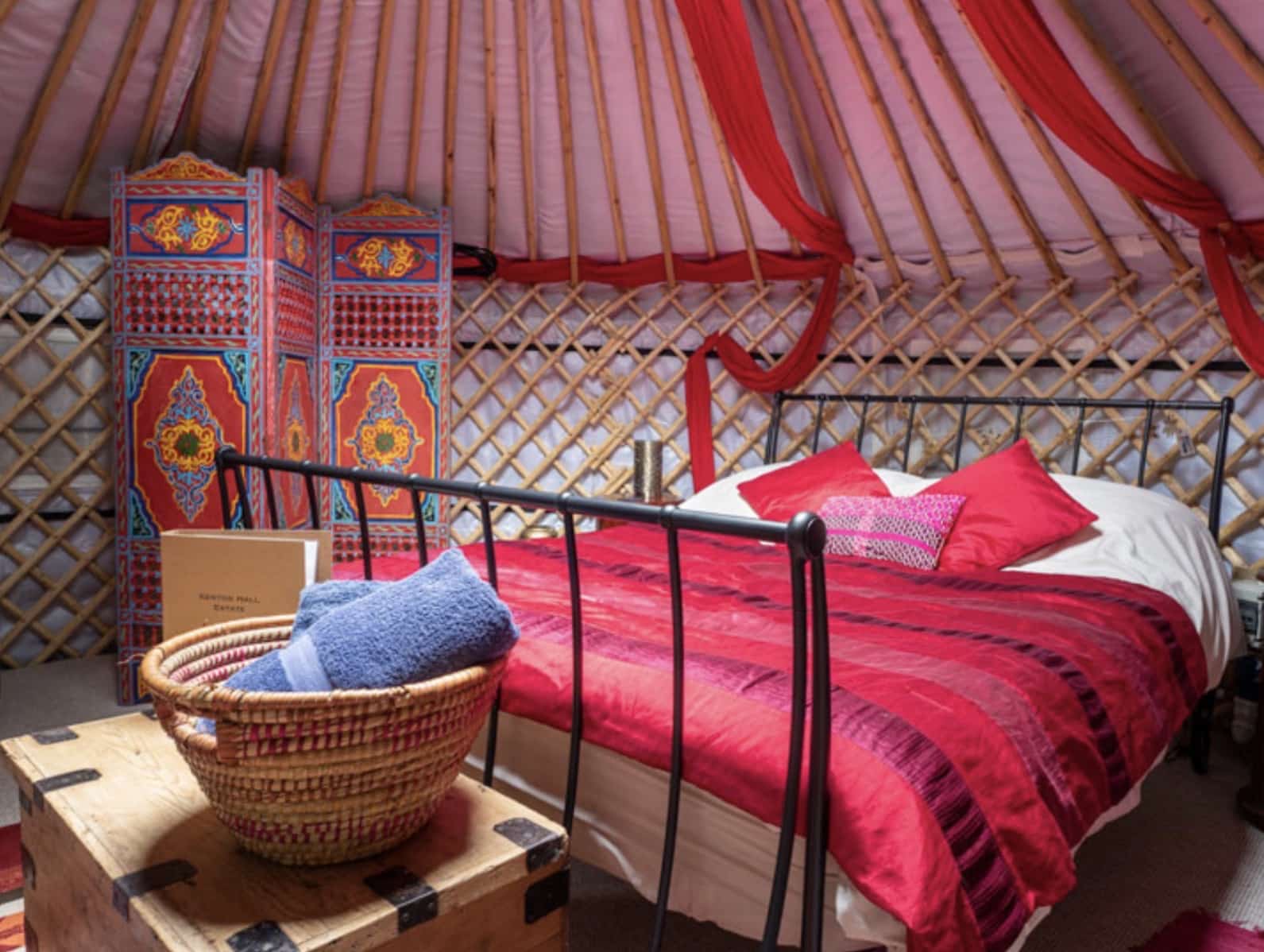
There is a clear step change in what guests will pay between a shared shower block and a private bathroom attached to the pitch. Private facilities — even a modest, well-built shower and WC a few steps from the door — reliably lift a site into a higher nightly rate and attract couples rather than groups.
It is the biggest infrastructure cost you will face and the one most likely to need planning input, so decide early rather than retrofitting. If budget forces a phased approach, a spotless, heated, well-lit shared facility beats a cheap private one that feels like a portacabin. We are always happy to talk through bases, decking and siting before you commit to groundworks.
Communal space does the social work
The counterintuitive finding from glamping reviews is that guests who booked for solitude end up writing warmly about the shared fire pit.
A well-designed communal area — a proper fire pit with enough seating, a covered kitchen, a table that still works in drizzle — creates the evenings people remember. It also lets you keep the individual units simpler, since not every yurt needs its own kitchen if there is an excellent shared one. A larger yurt makes a superb communal space in its own right; see our capacity guide for what each diameter comfortably holds.
The trick is sightlines. Guests want the option of company, not the imposition of it. Pitch so each yurt has its own outlook, with the communal space as somewhere people walk to.
Fewer, better pitches
It is tempting to maximise units per acre. Resist it.
Small sites command higher rates, generate better reviews and are far easier to run. “We had the place almost to ourselves” appears in five-star review after five-star review. Three well-spaced yurts at a premium rate can comfortably out-earn six crammed ones, with less wear, less laundry and fewer complaints.
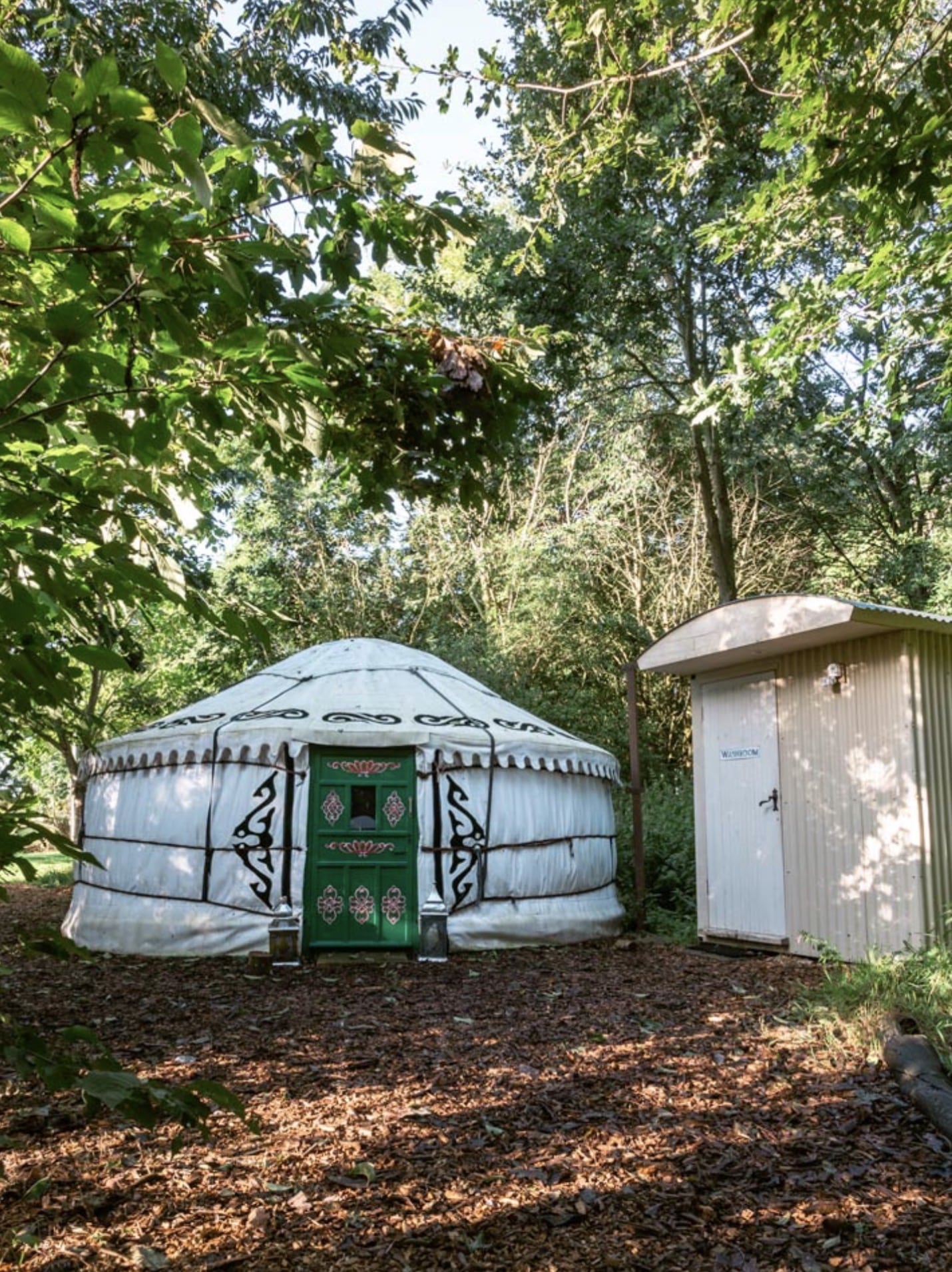
Yurts help here, because they take screening well. Their low, round profile settles into a hedge line or treeline in a way a static caravan simply does not — which is also, incidentally, why they tend to be received more sympathetically in planning terms. Five Oaks Campsite is a good example of a yurt sitting in a landscape rather than on top of it, and you can see the same approach at Spire View Yurts and Love2Yurt.
Why the joinery matters more than the marketing
Here is the part most yurt listings leave out. A yurt is not a product line. It is a piece of joinery, and the difference between one that lasts five years and one that lasts twenty-five is entirely in the hands that made it.
Our yurts are made by our own family in Inner Mongolia. Not a factory we buy from, not a supplier we found — our family, in their own workshop, using techniques passed down through generations. The steam-bending of the trellis walls, the cutting of the roof crown, the hand-painted patterns on the door: all of it done by people who learned it from the generation before them, and who will be answering for it if a frame fails in a Welsh gale.
That is also why we can adapt honestly for the UK. When a customer tells us their site is exposed, or that they need the yurt standing through February, that goes straight to the people making it — not through a procurement chain. Silicone-treated canvas, mixed sheep-wool felt, a waterproof roof layer for heavy rain: these are not options bolted onto a standard export model. They are what we asked our own family to build in, because we are the ones who have to stand behind it here.
You can read more about the history behind our yurts, or come and put your hands on the frame yourself at our Oxford show yurt.
What to actually look for in a yurt
- Frame timber and joinery — steam-bent, properly seasoned timber with well-cut joints.
- Canvas weight and treatment — silicone-treated for UK rain, not a summer-festival cover.
- Insulation — mixed sheep-wool felt, not a token liner. See our energy efficiency page.
- Stove compatibility — a flue arrangement designed for the crown, with proper flashing and heat shielding.
- Roof crown and skylight — the single most photographed feature of any yurt, and the one guests mention most.
- Decking and anchoring — how the yurt meets the ground determines how it performs in wind and how dry the floor stays.
- After-sales support — ask what happens in year seven when a cover needs replacing. Ours is a full restoration service, not a shrug.
The short version
Luxury glamping is not about luxury objects. It is about a guest getting into a warm bed, in a beautiful space, in a field, and not once thinking I wish I had booked a hotel.
Get the bed, the warmth and the bathroom right, keep the site small, and the yurt does the rest of the work — because a genuine handmade yurt is a building people want to photograph, and that is marketing you never have to pay for twice.
Thinking about adding yurts to your site?
We are a family business in Oxford, and the yurts are made by our own family in Inner Mongolia — the same hands, the same workshop, the same techniques passed down between generations. We have been supplying UK glamping sites for over three decades. Come and see one before you decide.
Explore our glamping yurts |
Book a show yurt viewing in Oxford |
Talk to us about your project
Photos are sourced from https://theportablewife.com/travel/destinations/luxury-glamping-suffolk-kenton-hall-estate/


